
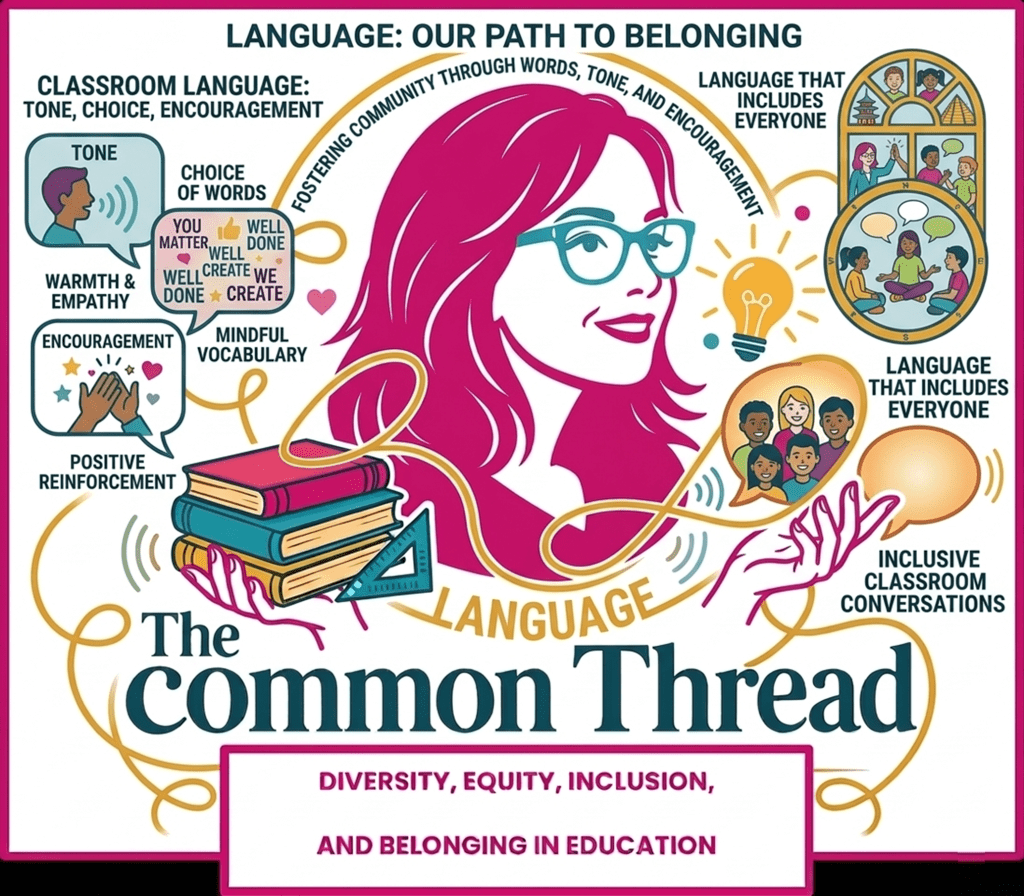

The Common Thread
Walk into any classroom and you’ll hear a constant flow of language, questions, instructions, feedback, encouragement. It’s so familiar that it can feel almost invisible.
But there’s a deeper question we don’t ask often enough:
What are our words actually signalling to students, and how are they being received?
Because language doesn’t just deliver learning.
It shapes expectations, communicates beliefs, and quietly influences who feels confident, capable, and included. It can also show our own bias, our own understanding of what is an is not acceptable.
If curriculum is what we teach, and literacy is how students access and participate, then language is how belonging is communicated, both directly and indirectly.
The hidden layer: micro-signals in everyday language
Most classroom language is not part of a formal plan. It lives in the small, repeated interactions:
- how we respond to a wrong answer (Nonverbal cues as well as verbal ones)
- who we call on, and how often
- the tone we use when giving instructions
- the way we frame challenge or difficulty
- the ways we build engagement and excitement in our classrooms
These are micro-signals, subtle, often unintentional cues that students pick up quickly.
Over time, they begin to answer questions like:
- Am I seen as capable here?
- Is it safe to take risks?
- Do my contributions matter?
Students don’t just listen to what we say.
They interpret what it means about them.
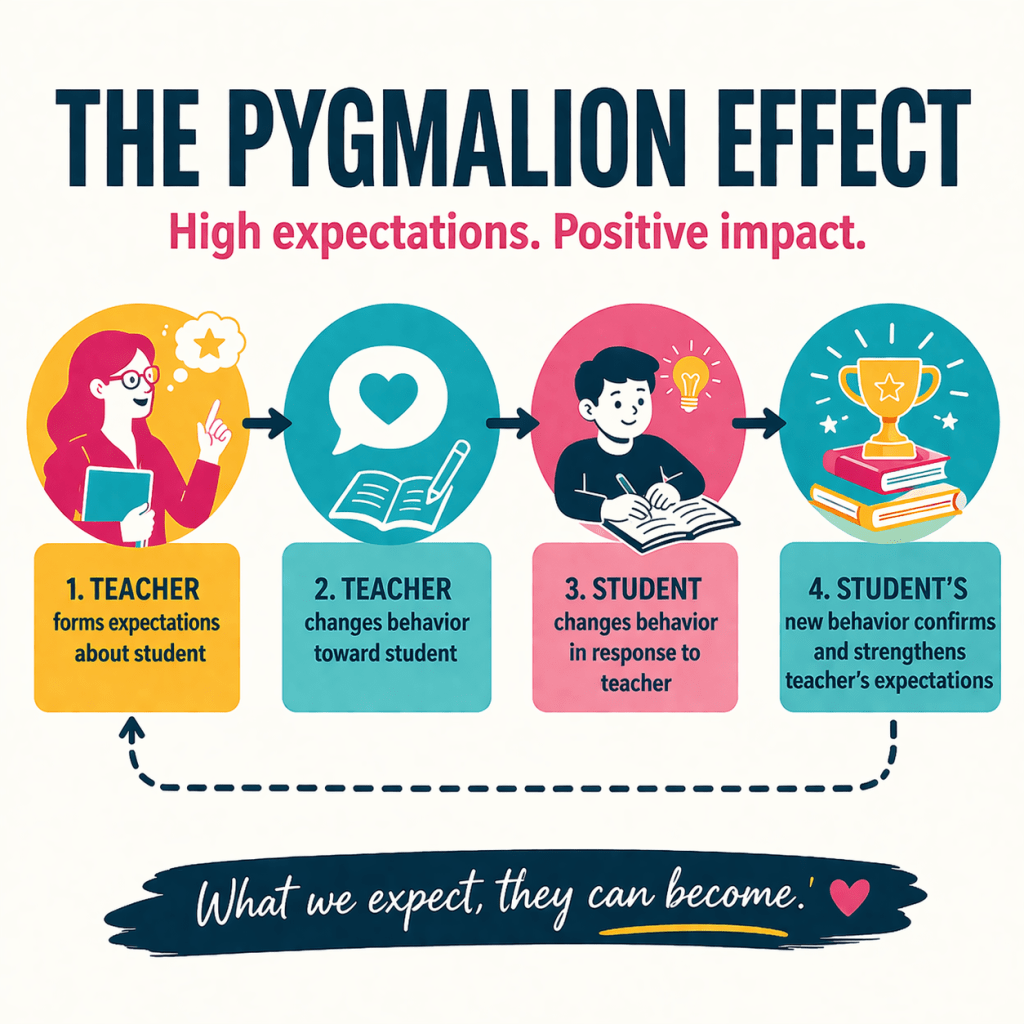
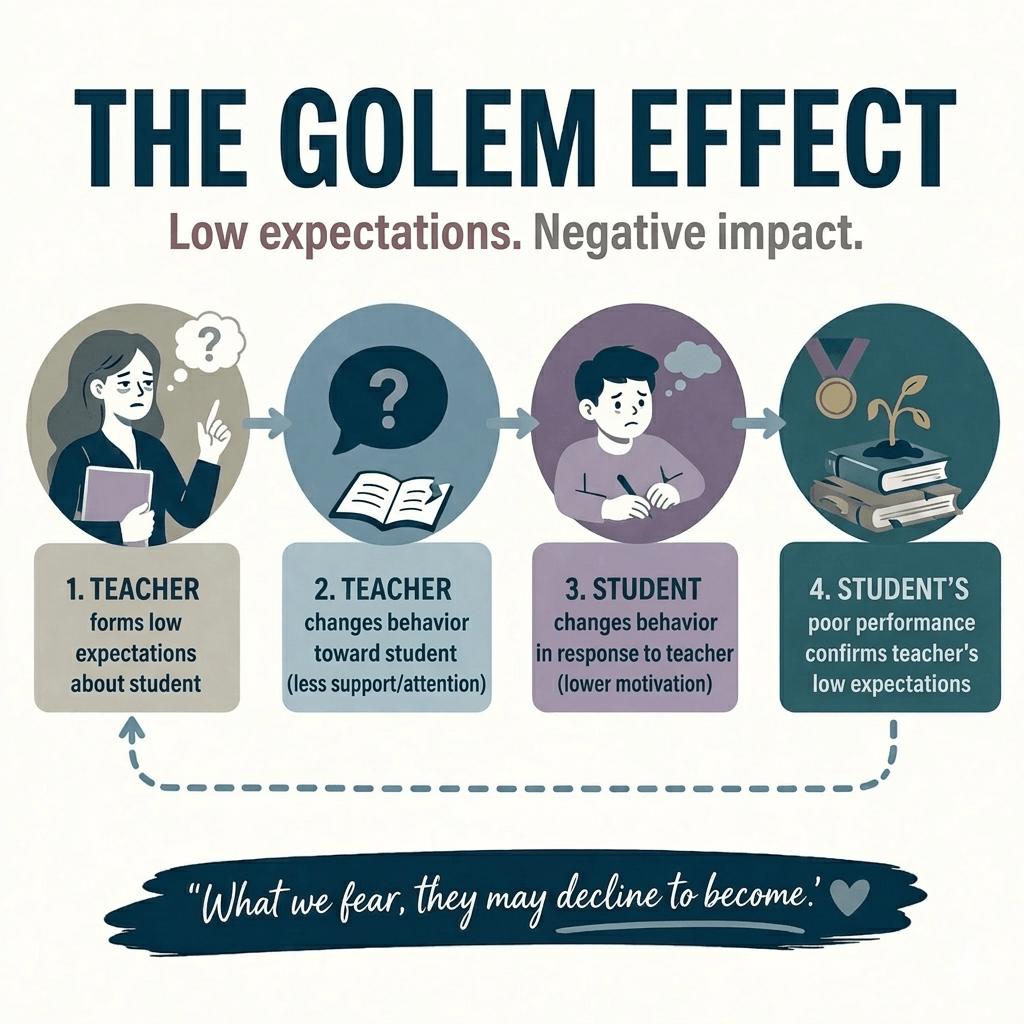
The Pygmalion versus the Golem effect!
Your expectations matter and the subtext of your language and choices will have an impact.
Tone: more powerful than we think
Two teachers can say similar words and send completely different messages.
Consider:
- ‘Not quite. Try again.’
- ‘Not quite yet, let’s think it through together.’
The difference is small, but the signal is significant.
Tone communicates:
- belief (or doubt) in a student’s ability
- patience (or frustration)
- partnership (or hierarchy in the classroom)
- Which classroom environment would you rather take risks in? Which classroom highlights the importance of metacognition and learning the steps? Which one is stressful and the focus on the outcome only?
When tone consistently signals respect and belief, students are more likely to stay engaged, even when learning feels difficult.
Expectations: what we imply, not just what we say
High expectations are often discussed in terms of outcomes. But in practice, they are communicated through language every day.
For example:
- ‘This is tricky, so I don’t expect everyone to get it’
vs - ‘This is challenging, and I’m going to support you to get there’
The first lowers the bar, even if unintentionally.
The second maintains high expectations while offering support.
Students are highly attuned to these cues. Over time, they internalise them:
- who is expected to succeed?
- who is expected to struggle?
- who gets stretched, and who doesn’t?
Ultimately this leads to,
- ‘Who believes in their ability to succeed, and who doesn’t’?
- ‘Who wants to be here, and who doesn’t?’
- ‘Who is going to mask their struggle with other behaviours and who is going to embrace it’?
Inclusive classrooms are not those where work is made easier, but where expectations are consistently high and clearly supported.
Framing: how we position learning
The way we frame tasks and responses shapes how students experience learning.
Deficit framing might sound like:
- ‘Some of you didn’t understand this’
- ‘This group struggled with…’
- ‘You are set… and therefore we are doing something different…’
Asset-based framing shifts the perspective:
- ‘Let’s build on what we’ve started here’
- ‘Here’s where we can go next’
- ‘Learning starts only once it gets tough. Thinking and working hard is good!’
This doesn’t ignore gaps, it reframes them as part of the learning process, rather than a fixed limitation.
Similarly, how we respond to mistakes matters:
- Are they signals of failure?
- Or are they positioned as a normal, valuable part of learning?
The language we choose answers this for students.
The risk: when language goes unchecked
Just as curriculum can become tokenistic, classroom language can become habitual, and habits are powerful.
Without reflection, we may unintentionally:
- call on the same students repeatedly
- soften expectations for some and not others
- use praise that is uneven or limiting. Focusing on the student rather than the choices (‘You’re so clever’ vs ‘That strategy worked well’)
- signal frustration more quickly with certain learners
None of this is usually deliberate.
But over time, these patterns can shape students’ sense of where they fit.
And again, students notice.
What this looks like in practice
The strength of focusing on classroom language is that it’s an immediate, actionable shift.
You don’t need to redesign the curriculum.
You need to become more intentional with what you’re already saying.
1. Pause and notice patterns
- Who do you respond to most?
- Whose answers are extended, and whose are closed down?
- When does your tone shift?
- If a student doesn’t know the answer, how do you frame this as a learning opportunity rather than a failure?
2. Make belief explicit
- ‘I know you will absolutely give your best to this’
- ‘I believe in you’ (supported with appropriate scaffolding)
These statements matter, especially for students who may not hear them elsewhere.
3. Normalise struggle
- ‘This is challenging, but we’ll get there, learning starts once you get stuck’
- ‘This is the part where it gets tricky’
- ‘If you’re finding this hard, you’re in the right place’
This reduces anxiety and increases participation.
4. Use inclusive questioning
- Give thinking time before taking answers
- Invite multiple approaches
- Build on responses rather than evaluating them immediately, if a learner gives a partial or incorrect answer, build on it, don’t dismiss it!
‘I can see why you might think that, that’s a really astute observation, however I was thinking more of this…can someone build on this?’
5. Be consistent with expectations
- Avoid lowering the bar for some learners
- Instead, increase the scaffolding and support
Why this matters for belonging
Belonging is not built through single moments, it’s built through patterns.
And language is one of the most consistent patterns students experience.
Over time, it tells them:
- You are capable
- Your ideas matter
- You are part of this learning
or you can signal the opposite.
The power of language is that it operates in real time. Every lesson, every interaction, every response is an opportunity to reinforce inclusion.
What you can do tomorrow
If you’re looking for a simple starting point:
- Choose one class and consciously adjust how you respond to incorrect answers
- Add one phrase that signals belief (‘Let’s work through this together’)
- Track who you call on, and aim for greater balance
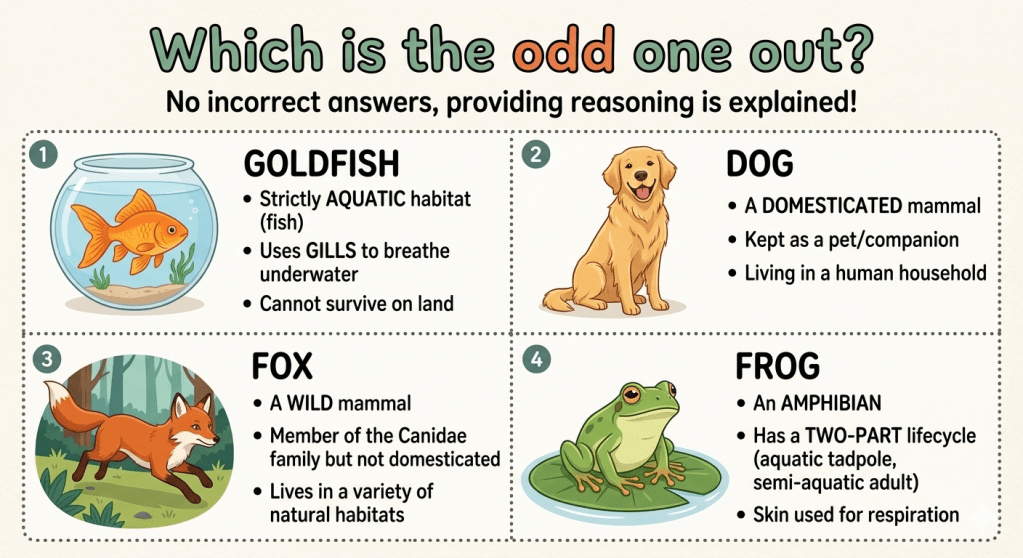
- Try to build in some tasks that don’t have a definite answer. I like to use the ‘Which one is the odd one out and why’? so that everyone has a chance to explain their thinking and get praised for their work! (There is no correct answer, only answers that are not thought of effectively, everyone has the same starting point) This builds confidence over time.
Small, intentional changes in language can have a disproportionate impact.
Final thought
If mirrors and windows help students to see,
and literacy helps them to participate,
then language is what tells them:
‘You belong here and you are valued!’
And often, it does so in ways we don’t even realise until we choose to notice.
Further reading
Erikson Institute (2019) Inclusive language is a classroom superpower, Erikson Institute Blog, 2 October. Available at: https://www.erikson.edu/blog/inclusive-language-is-a-classroom-superpower/
Kratz, J. (2024) ‘6 research-backed inclusive language dos and don’ts’, Forbes, 4 February. Available at: https://www.forbes.com/sites/juliekratz/2024/02/04/6-research-backed-inclusive-language-dos-and-donts/
Roberts, N. (2021) ‘Why we need to ditch deficit labels in SEND language’, TES Magazine, 22 June. Available at: https://www.tes.com/magazine/analysis/general/why-we-need-ditch-deficit-labels-send-language
University College London (UCL) (2023) Using inclusive language in education. Available at: https://www.ucl.ac.uk/teaching-learning/publications/2023/jul/using-inclusive-language-education
Worth-it (2021) How to build positive relationships in school, Worth-it Blog, 17 May. Available at: https://www.worthit.org.uk/blog/positive-relationships-school


Leave a Reply