

THE COMMON THREAD
Walk into most classrooms and you’ll see literacy everywhere, embedded in reading tasks, writing activities, and assessment criteria. It’s carefully planned, structured, and aligned to curriculum goals.
But there are deeper questions we don’t ask often enough:
Who can actually access it, use it, and shape it, and who can’t?
Does the ability to decode mean that students can fully understand the context?
How can literacy build social and cultural capital?
Does literate signal included?
In the same way that an inclusive curriculum depends on mirrors and windows, an inclusive approach to literacy depends on something equally powerful:
Access, voice, and participation.
If mirrors and windows help students see, literacy determines whether they can engage, respond, and belong.
From mirrors and windows to literacy as power
The idea of mirrors and windows gives us a strong foundation:
- Mirrors: students see themselves reflected
- Windows: students understand others
But there’s a crucial next step.
Seeing is not the same as participating.
A student might recognise themselves in a text (a mirror), or learn about another perspective (a window). But without the literacy skills to interpret, question, and respond, their role remains passive.
Literacy is what turns:
- mirrors into validation
- windows into understanding
- classrooms into spaces of participation
Without literacy, inclusion risks staying at the level of representation. With it, inclusion becomes something students actively experience.
Literacy as access: who gets in?
Just as curriculum design asks whose stories are told, literacy asks:
Who can access those stories in the first place?
Who is advantaged and disadvantaged by the choices of text and the metaphorical language that is frequently used in education?
When literacy is secure:
- Students can engage with the full curriculum
- They can navigate complex texts, instructions, and ideas
- They can move confidently across subjects
- If they truly understand the text, they begin to understand the subtext, the meaning and the inference.
When it isn’t:
- The curriculum becomes partially inaccessible
- Learning is fragmented
- Students may disengage, not from lack of ability, but from lack of access and from cognitive overload!
This is where literacy builds directly from curriculum thinking. It ensures that mirrors and windows are not just present, but reachable.
Literacy as voice: who gets heard?
Mirrors validate identity, but literacy enables expression.
In an inclusive classroom, it’s not enough for students to see themselves reflected. They need opportunities to:
- articulate their thinking
- share their experiences
- challenge ideas
- contribute to discussions
This is where literacy becomes deeply connected to belonging.
Because belonging isn’t just about recognition, it’s about being heard and taken seriously.
Expanding literacy here means valuing multiple forms of communication:
- spoken language
- storytelling
- debate and discussion
- digital and visual expression
When these are embedded into classroom practice, more students find ways to participate meaningfully.
Literacy as participation: who gets to shape the learning?
Windows help students understand the world.
Literacy allows them to interact with it.
Through literacy, students:
- question what they read
- connect ideas across topics
- collaborate with others
- form and defend their own viewpoints
This shifts them from consumers of knowledge to contributors.
And this is where belonging becomes tangible.
A classroom is not inclusive because of what is displayed on the walls or listed in the curriculum. It becomes inclusive when students can actively take part in the learning experience, when they can influence it, respond to it, and see their role within it.
‘Without enough language – a word gap – a child is seriously limited in their enjoyment of school and success beyond’. (Harley, 2018, p. 2)
The risk: when literacy is overlooked
There’s a parallel here with the ‘add and stir’ approach to curriculum.
Just as representation can become tokenistic, literacy can become:
- overly focused on technical skills in isolation
- detached from meaning and purpose
- assessed more than it is lived
- Focused on written rather than oral assessment
When this happens:
- Students may decode text without truly engaging
- Writing becomes performative rather than expressive
- Participation is limited to those already confident
- Those with a word gap are continually disadvantaged, this is not inclusive; this does not increase a sense of belonging.
And again, students notice.
They can tell when literacy is something they do for school, rather than something that gives them power within it.
What this looks like in practice
Building on mirrors and windows, schools can strengthen inclusion through literacy by being equally intentional.
1. Make literacy visible across the curriculum
Ask:
- Where are students reading, writing, speaking, and thinking deeply?
- Who is thriving in these moments, and who isn’t?
- Is there a large focus on extracts rather than rich and extended reading? This may feel more inclusive, however appropriately scaffolded pieces, allow all learners to build their vocabulary and feel more confident in their linguistic ability.
2. Connect literacy to meaning, not just mechanics
- Use texts that matter
- Create purposeful writing opportunities
- Prioritise discussion and dialogue
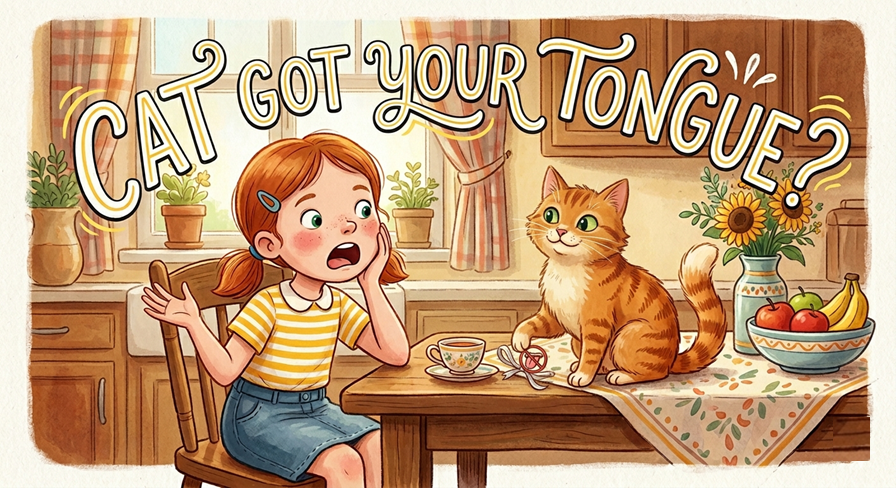
- Focus on metaphorical language as well. Idioms and common metaphors, where not understood, can create a sense of isolation and ‘otherness’.
3. Plan for participation, not just completion
- Build in structured talk across all subjects
- Use collaborative tasks
- Create space for multiple perspectives
- Scaffold up, don’t recue the reading to support students
4. Value different starting points
- Recognise that students arrive with different literacy experiences
- Scaffold without limiting
- Maintain high expectations with appropriate support
5. Keep student voice central
Just as with curriculum:
- Do students feel confident contributing?
- Do they feel listened to?
- What helps them engage—and what holds them back?
Expanding inclusion beyond representation
Mirrors and windows ensure that students can see.
Literacy ensures that they can:
- access what they see
- respond to it
- participate in shaping it
Without literacy, inclusion can remain symbolic.
With literacy, it becomes functional, lived, and sustained.
What you can do tomorrow
To build on your work around mirrors and windows:
- Review a lesson or scheme and ask: Where is the literacy demand here? Who might struggle to access it?
- Add one structured opportunity for student voice (discussion, reflection, or debate)
- Adapt a task so students are not just reading, but responding, making inferences, questioning, or creating. Do this in a subject other than English or the Humanities.
- Plan which common idioms can be used in different units, this may feel outdated, however they are often used in History, English and other GCSE and A level exams as we as in common discourse. Not knowing these can disadvantage and disengage!
Small shifts here can have a significant impact on participation and belonging.
Final thought
If the first question of an inclusive curriculum is:
“Do students see themselves and others?”
Then the next question must be:
“Can they do something with what they see?”
Because true inclusion isn’t just about visibility.
It’s about access, voice, and participation.
And that’s what makes literacy a superpower.
Further reading:
Harley
Harley, J. (2018) Foreword. In: Why closing the word gap matters: Oxford language report. Oxford: Oxford University Press, p. 2.
Burnett, Merchant & Neumann
Burnett, C., Merchant, G. and Neumann, M. (2020) ‘Closing the gap? Overcoming limitations in sociomaterial accounts of early literacy’, Journal of Early Childhood Literacy, 20(1), pp. 111–113. Available at: https://doi.org/10.1177/1468798419896067
Global Equality collective
Global Equality Collective GEC KnowHow Bookshop. Available at: GEC KnowHow Bookshop
Global Equality Collective 6 books to diversify your bookshelf (NCAFF). Available at: https://www.thegec.education/blog/6-books-to-diversify-your-bookshelf-ncaff
Quigley
Quigley, A. (2018) Closing the vocabulary gap. London: Routledge.
Wilby
Wilby, A. (2024) ‘Privilege, knowledge, and access: navigating education through cultural capital’, Global Equality Collective Blog, 12 September. Available at: https://www.thegec.education/blog/privilege-knowledge-and-access-navigating-education-through-cultural-capital
Worth-it (2021) How to build positive relationships in school, Worth-it Blog, 17 May. Available at: https://www.worthit.org.uk/blog/positive-relationships-school
 The Common Thread